


3g Glycine, 60 Minutes Out
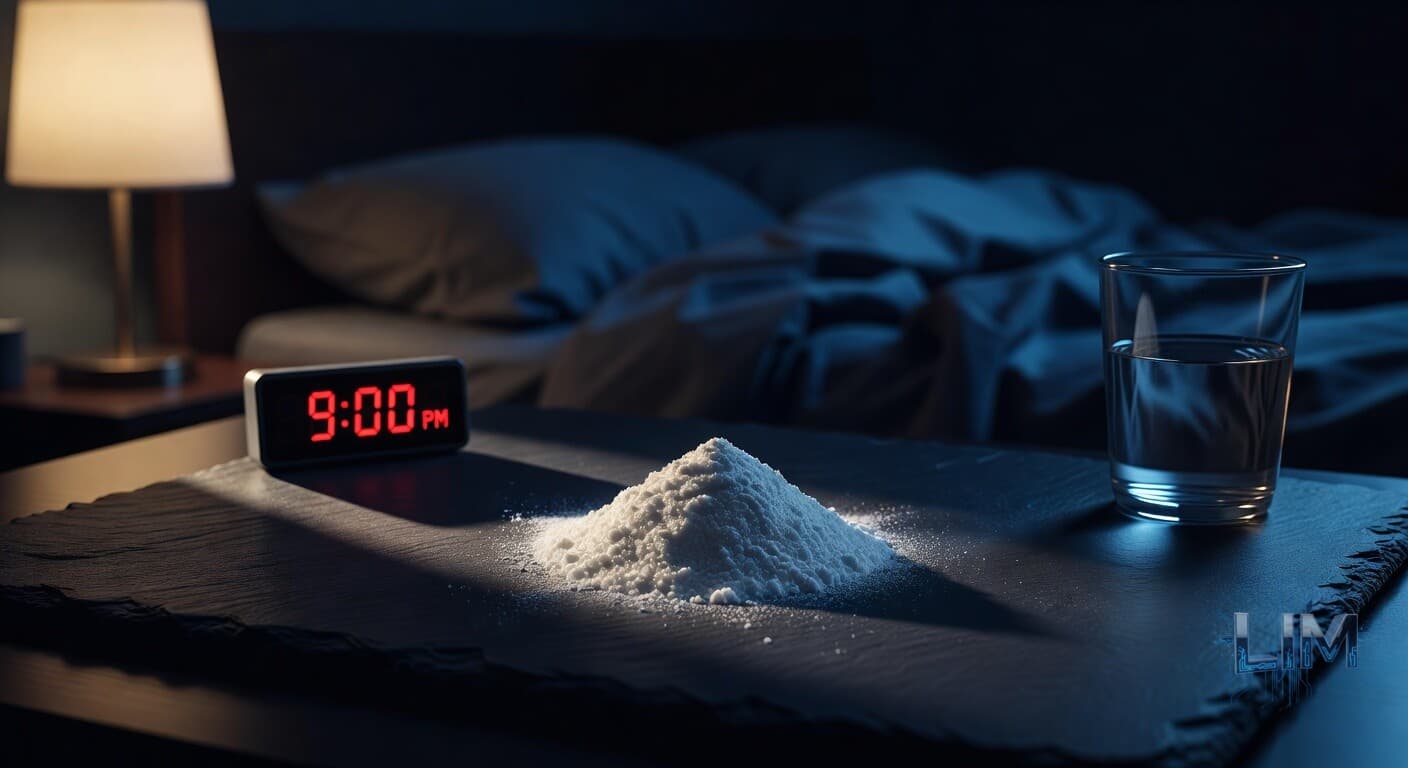
Marcus clocks out at 07:14. The sun is already up. Twelve hours of admits, two codes, one combative patient who broke a coworker's nose. He is 41. Hospital security supervisor at a level-one trauma center, overnight shift. Two kids at home asleep when his radio cleared at 03:12.
By 08:30 he will be in bed. By 08:35 he will be staring at the ceiling.
He has tried melatonin. It made things worse.
Sleep is a temperature event, not a brain event
When a healthy adult falls asleep at night, the trigger is not darkness. It is a 0.3 to 0.5°C drop in core body temperature. Blood shunts from your core out to your hands and feet. Heat radiates off. The hypothalamus drops its setpoint. The brain reads the gradient as permission to disengage.
Related Read
Why First Responders Can't Out-Train Chronic Under-RecoveryFirefighters, cops, and paramedics train through sleep debt, then plateau and blame willpower. The 2026 research says the limiter is recovery, not effort. Here is what HRV-guided training (Javaloyes, J Strength Cond Res, n=20) and the firefighter shift-work data actually show, why a wearable on your wrist does nothing until you act on the recovery signal, and how to program around a rotation instead of pretending you have a normal week.
Melatonin biases this. Temperature executes it.
That is why Marcus has a problem no sleep-hygiene checklist can solve. He lies down at 08:30 with 18 hours of accumulated adenosine, but his cortisol is climbing on a natural waking ramp, his core temperature is rising above its overnight nadir, and the morning light on his drive home already hit the photosensitive retinal ganglion cells that drive his circadian pacemaker.
He is exhausted and biologically scheduled to be awake.
The deep sleep stages, where growth hormone pulses and the glymphatic system clears metabolic waste, are the first thing that fragments.
What 3g glycine actually does
Glycine is a non-essential amino acid. It binds NMDA co-agonist sites in the suprachiasmatic nucleus within 30 to 60 minutes of a 3g oral dose. Three things happen, in order.
First, vasodilation. The hands and feet warm up after 3g oral glycine, with a corresponding 0.2 to 0.4°C drop in core body temperature. That is the same distal-vasodilation cascade that precedes natural sleep onset, reproduced on demand. You are not sedating the brain. You are forcing the thermoregulatory step that opens the sleep gate.
Second, faster slow-wave latency. A placebo-controlled crossover in subjects with unsatisfactory sleep showed 3g glycine 60 minutes pre-bed produced faster progression to slow-wave sleep on polysomnography and better subjective sleep quality the next day. No benzodiazepine pharmacology. No morning grogginess on cognitive batteries.
That last part matters when your post-sleep block ends at the school pickup line.
Third, next-day function on short sleep. Subjects under partial sleep deprivation — the exact population a rotating shift worker becomes every week — showed reduced subjective fatigue and daytime sleepiness versus placebo at 3g.
Glycine does not make you tired. It tells your vasculature to behave like it is midnight.
Why melatonin makes night shift worse
Melatonin is a phase-shifting hormone, not a sedative. Its job is entrainment of the circadian pacemaker. Timing relative to your dim-light melatonin onset determines whether a dose advances or delays your circadian phase.
For a rotating night-shift worker, "the wrong clock position" is the default. Marcus's dim-light onset is displaced, unstable, or inverted. A 07:00 melatonin dose re-entrains him toward a daytime-active rhythm he then has to fight on his next overnight. He wakes after four hours with the pacemaker partially aligned to the wrong schedule.
Glycine does not engage the phase-shifting system. It acts on thermoregulation and sleep architecture without touching the pacemaker's timing signal. You can dose it 3-on, 3-off. Only on overnights. On days off for a nap.
The intervention is agnostic to your clock because it is not trying to move your clock.
Sedating antihistamines and Z-drugs are a third category. Shorter latency, fragmented slow-wave architecture, anticholinergic load that compounds across consecutive shifts. For most rotating workers, glycine is the right primary tool.
Dose, timing, form
Three grams. Sixty minutes before the intended sleep window, not at lights-out. The vasodilation needs runway.
Pharmaceutical-grade powder in cold water. Slightly sweet, no capsule lag. Capsules work but require swallowing nine or ten 300mg caps to hit the dose.
Not 1g. Published effect sizes are all at 3g. Lower doses do not reliably produce the vasodilation. Not 5g either. Diminishing returns and unnecessary osmotic load.
The stack and the room
Magnesium glycinate, 300 to 400mg elemental, with the glycine. The glycinate form contributes additional glycine. The magnesium supports GABA tone.
Bedroom at 65 to 67°F. Glycine lowers core temperature. Ambient heat fights the mechanism.
Blackout curtains plus a sleep mask. Retinal photoreceptor signal is the one thing glycine cannot override.
Orange or red wraparound sunglasses on the drive home, before the parking lot. Morning light damages your next sleep block more than you realize.
Caffeine cutoff 8 to 10 hours before your pre-sleep dose. Half-life is 5 to 6 hours. A 03:00 coffee is still at half-strength at 09:00.
No alcohol as a sleep aid. It suppresses REM and fragments the slow-wave sleep glycine is specifically recruiting.
The post-shift sequence
- End shift. Orange-tinted glasses on before the parking lot.
- Home within 30 minutes. Cold, dark room. Phone in another room or on grayscale.
- 3g glycine in cold water, 60 minutes before you want to be asleep.
- Sleep block of 6 to 7.5 hours, protected from daylight and household noise.
- On waking: direct sunlight within 10 minutes, protein-forward meal, train if programmed.
What this is not
Not a stimulant replacement. Not a fix for shift-work disorder. Not a way to outrun chronic sleep debt over more than a cycle or two. It will not rescue a worker stacking alcohol, late heavy meals, and screens in front of the sleep window.
It is a single-lever intervention at the thermoregulatory gate, and it is the right first lever.
I ran a version of this stack while dropping 112 pounds working overnight hospital security shifts. 308 to 196. Same overnight rotations Marcus is on right now.
The protocol is plain. Identify the rate-limiting physiological step. Dose the molecule that acts there. Verify against published effect sizes.
The effect sizes are moderate, not miraculous. The mechanism is elegant, not marketable. The fatigue data is useful, not sexy. Three moderate effects converging on the same outcome is what a usable protocol looks like.
Run it for seven consecutive post-shift sleeps. PSQI at day zero, PSQI at day seven. The data will do the talking.
When you are done outsourcing your protocol to whatever blog you read last, and you want a system that tunes your stack against your actual sleep, your actual labs, and your actual rotation, start at legacyinmotion.fit.
---
The data behind this
- Bannai M, Kawai N 2012 (Frontiers in Neurology) — cutaneous vasodilation at the hands and feet after 3g oral glycine, with a corresponding 0.2 to 0.4°C drop in core body temperature.
- Yamadera W et al 2007 (Sleep and Biological Rhythms) — placebo-controlled crossover in subjects with unsatisfactory sleep; 3g glycine 60 min pre-bed produced significant PSQI improvements, faster polysomnography progression to slow-wave sleep, and zero next-morning grogginess on cognitive batteries.
- Inagawa K et al 2006 — 3g glycine under partial sleep deprivation; significant reduction in subjective fatigue and daytime sleepiness vs placebo.
- Brzezinski A and Lewy AJ work — melatonin as a phase-shifting hormone (dim-light melatonin onset reference); dose timing relative to DLMO determines circadian phase advance vs delay.
- Standard sleep-onset physiology: 0.3-0.5°C drop in core body temperature precedes sleep onset; distal vasodilation is the rate-limiting step.
- Caffeine half-life 5-6 hours (fast metabolizers); CYP1A2 slow metabolizers stretch to 7-9 hours.
- Jake's n=1: 308 to 196 across 12-hour overnight hospital security shifts using the same overnight protocol stack.
---
Log tonight's shift. Wake up to an adjusted plan.
This is what Chiron, our AI head coach, does on every meal and workout you log: catches the small wrong detail before it costs you years. HERMES — our research engine — surfaces new science the morning it publishes, so your coaching moves with the literature instead of trailing it by quarters. You log; we adapt your plan that day. No PDF reprints, no static plan that ages out the day your shift changes or you have a kid.
$29.99/month · $249.99/year · 7-day free trial · cancel anytime · no enrollment fee · no contract
Start coaching → · See the full app →
Jake Long built it after losing 112 lbs working hospital night shifts — when no human coach could keep up with his schedule. He wanted the system he wished he'd had at 308. Now you can use it too.
Common Questions, Answered
How much glycine should I take before bed for sleep?
3g oral glycine taken 60 minutes pre-bed is the dose used in Bannai and Kawai (Frontiers in Neurology, 2012) and Yamadera et al. (Sleep and Biological Rhythms, 2007). It produced a 0.2 to 0.4°C core temperature drop and faster progression to slow-wave sleep on polysomnography.
Why does melatonin make my night shift sleep worse?
Melatonin is a phase-shifting hormone, not a sedative. For a rotating night-shift worker, the dim-light melatonin onset is displaced or inverted, so dosing at the wrong clock position can advance or delay circadian phase rather than trigger sleep onset.
Does glycine cause morning grogginess like sleep aids do?
No. Yamadera et al. (2007) ran cognitive batteries the next day and found zero next-morning grogginess at 3g. Glycine is not benzodiazepine pharmacology — it forces distal vasodilation and a core temp drop rather than sedating the brain.
Comments (0)
Comments are reserved for Legacy In Motion members.
$29.99/month. No contracts. Cancel anytime.
Get StartedAlready a member? Sign in
You read this far. Now do this.
Stop reading about it.
Start training around your real life.
I went from 308 to 196 lbs working 12-hour overnight shifts with two kids and zero personal trainer. The system I used is now an app that plans your training and meals around YOUR schedule — overnight, day shift, all of it.
Cancel anytime · No setup fee · No long contract
Free Assessment
What's Blocking Your Results?
Take our 60-second quiz and get a personalized breakdown of what's stopping your progress — plus how AI coaching solves it.
Take the QuizFree PDF · No Credit Card
Download the Shift Worker AI Fitness Blueprint
The protocol Jake wishes he'd had at 308 lbs: sleep timing for rotating shifts, post-shift macros, and the AI deload trigger, from the run that took him to 196. Free, no card needed.
Built by someone who actually worked them. No fluff. Unsubscribe any time.
Keep Reading
2026-06-03
Why First Responders Can't Out-Train Chronic Under-Recovery
Firefighters, cops, and paramedics train through sleep debt, then plateau and blame willpower. The 2026 research says the limiter is recovery, not effort. Here is what HRV-guided training (Javaloyes, J Strength Cond Res, n=20) and the firefighter shift-work data actually show, why a wearable on your wrist does nothing until you act on the recovery signal, and how to program around a rotation instead of pretending you have a normal week.
2026-04-20
Magnesium for Night Shift Brains
2026-05-29
The 3,000 Data Points Your Watch Captures — And the Four You Actually Look At
An ER nurse's watch logs thousands of metrics. She only checks four. Here's how an AI agent turns the flood into a plan that actually fits night shifts, kids, and real life.
Join our free fitness community — get coaching tips, share wins, and stay accountable.
JOIN THE DISCORD →