


Garmin HRV for Night-Shift Workers: The Recovery Edge
Your Garmin already knows when to push and when to pull back. Most night-shift workers ignore it. Here is how to stop.
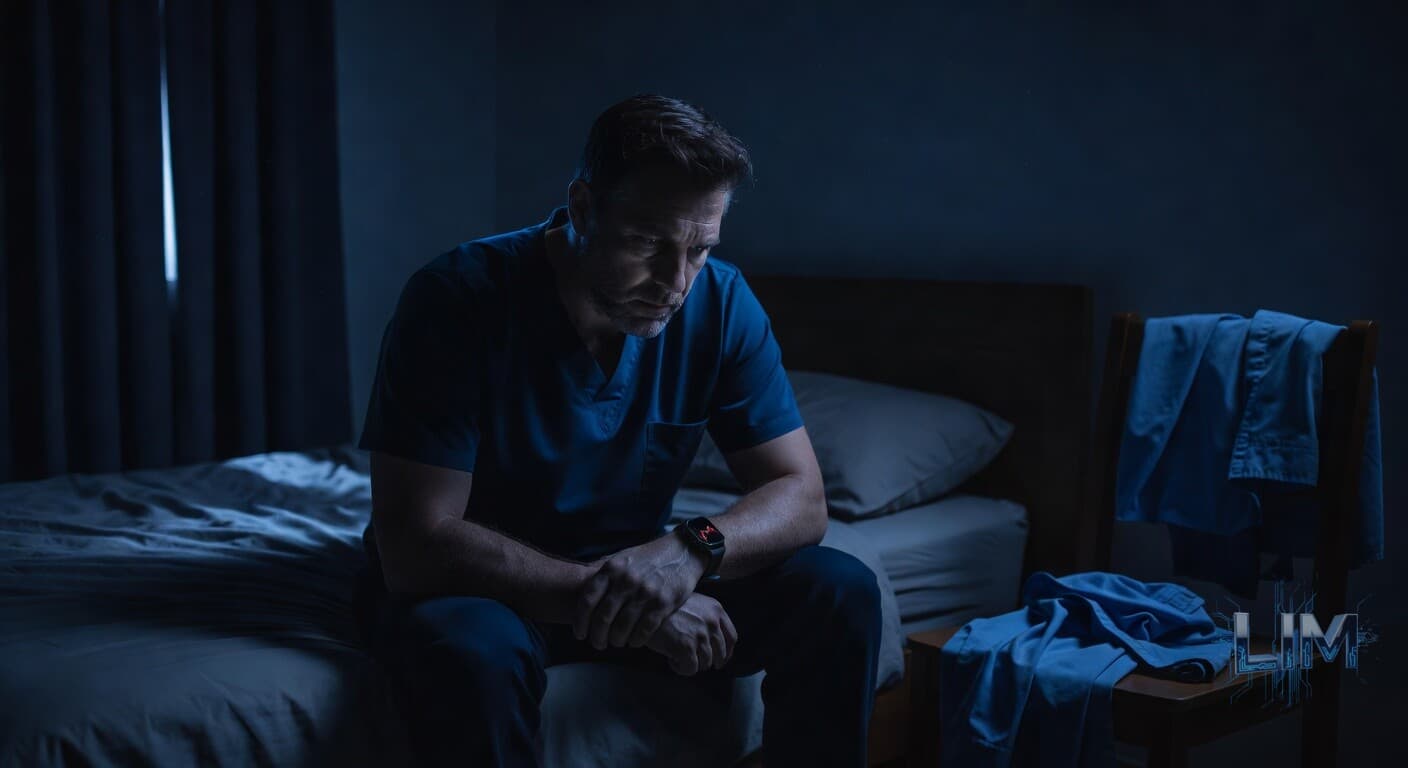
Marcus is 41. Hospital security supervisor at a level-one trauma center, overnight shift. Two kids at home. It is 6:47 AM on Easter Monday and he just walked off a twelve.
He pulls up his Garmin in the parking lot and stares.
Body Battery: 14. HRV Status: Unbalanced. Training Readiness: 9 out of 100.
He has chest day on the calendar. He puts the watch in his pocket and drives to the gym anyway.
By Wednesday his lower back is locked up, his sleep is wrecked, and the scale is up four pounds. He blames Easter ham.
Easter ham did nothing. His Garmin tried to tell him that on Monday morning. He just did not listen.
TL;DR - Night-shift workers see overnight HRV crash 20–30% faster than day workers after circadian disruption. - A 2025 meta-analysis on HRV-guided training showed the biggest gains in adults with disrupted sleep, exactly the night-shift population. - Overnight HRV under 25 ms is your nervous system filing a complaint, not a vibe. - Magnesium glycinate 30–60 minutes before YOUR sleep window beats generic "before bed" dosing once your bed is at 9 AM. - Jake dropped 112 pounds in 9.5 months working hospital security graveyards by training what the data said, not what the calendar said.
The reason your HRV tanks before your co-workers' does
Heart Rate Variability is the gap between heartbeats. Bigger gap, more parasympathetic tone, better recovery. Smaller gap, your body is in fight-or-flight while you sleep.
Shift work flips your circadian clock. Cortisol goes sideways. Overnight HRV crashes faster than the day-shift guy in the next squat rack.
Now layer Easter dinner on top. Or a 2 AM Game 7 that ran past midnight. Inflammation, alcohol, and a 3-hour shift in your sleep window stack on the same biomarker.
Your Garmin is logging it. You are pretending it is not there.
The research consistently suggests adults with disrupted sleep schedules see the biggest gains from HRV-guided programming. Translation: shift workers benefit more from listening to HRV than anyone else. We just listen the least.
What the numbers actually mean
Garmin in 2026 stacks HRV Status on top of Training Readiness, Body Battery, and overnight stress. The number you want is the overnight average, not the spot read at 7 AM after coffee.
Rough benchmarks once you have two to four weeks of personal baseline:
- 60+ ms overnight: green light, push.
- 40 to 60 ms: program as planned, eat clean, sleep clean.
- 25 to 40 ms: pull back to Zone 2 or mobility.
- Below 25 ms: walk outside, hydrate, sleep. That is the whole prescription.
Do not chase someone else's HRV. Compare you to you, not to the 26-year-old day-shift influencer with a perfect sleep window.
The 48-hour rebound after a big eating day
Easter wrecked Marcus because salt and alcohol gut overnight HRV inside one cycle. Here is the protocol that works for the night-shift community we coach.
Day one: sleep is the workout. Add 30 to 60 minutes to your normal shift-sleep duration. Eat protein-forward and drop refined carbs. Three to four liters of water with electrolytes. Skip the gym.
Day two: if your overnight HRV rebounded 20% or more, go. Zone 2 only. Walk outside during your "morning," even if your morning is 5 PM.
Magnesium glycinate 30 to 60 minutes before YOUR sleep window. Not "before bed."
Marcus's bed is at 9 AM. The generic advice was written for the 9-to-5 crowd, and it is costing him recovery.
Add 4-7-8 or box breathing into the wind-down. Both have published HRV improvements inside a week.
Why most shift workers stare at the data and train anyway
This is the part nobody fixes. The watch buzzes "low training readiness." You override it because the calendar says chest day.
Two weeks later you are flat, fat loss is stalled, and you blame your willpower.
The data did not fail. The decision layer failed.
Your Garmin is collecting evidence. You are ignoring it.
This is the kind of pattern Chiron, our AI head coach, flags in the daily program review. Garmin syncs through HealthKit at 6 AM.
By the time you check your phone, today's plan has already been rewritten. Heavy squats moved to Thursday. Zone 2 walk dropped in for today. Magnesium reminder fired ahead of your 9 AM sleep window.
The voice-note check-in catches the cortisol-tell in your tone before the scale moves. You sound flat on Tuesday morning. The AI hears it. The week reshuffles. You do not have to interpret your own data while half-asleep.
HERMES, our research bot, watches the literature so the 2025 HRV meta-analysis did not sit in a PDF on someone's hard drive. It was in your protocol the week it dropped.
What Jake learned the hard way
Jake worked hospital security on graveyards while losing 112 pounds in 9.5 months, 308 down to 196. Before that protocol locked in, he spent years staring at the same Garmin data Marcus is staring at and guessing wrong.
Lifting heavy on red days. Resting on green days. Burning out, plateauing, repeating.
The fix was not more discipline. Discipline is overrated. Data acted on is not.
Once the decisions were automated against his own baselines, the noise stopped. Holiday meals stopped costing him a week. Playoff late-nights stopped costing him a training block.
That is the whole product. Your watch already has the answer. The system makes sure you actually hear it — on a night-shift schedule, after a holiday, during playoffs, while running on six broken hours.
If you are already wearing a Garmin and still guessing, you are paying for a sensor and throwing out the readings. Stop doing that. Come see what the night-shift community is building at legacyinmotion.fit.
---
The data behind this
- 2025 meta-analysis on HRV-guided training: largest performance gains in adults with disrupted sleep schedules, including night-shift workers.
- Garmin Body Battery, HRV Status, and Training Readiness algorithm documentation (2026 firmware).
- Magnesium glycinate dosing window — circadian-aligned vs clock-aligned timing studies (sleep architecture literature).
- Breath-pacing protocols (4-7-8, box breathing) with measured HRV improvement inside seven days.
---
Log tonight's shift. Wake up to an adjusted plan.
Most programs die in the gap between the plan and your real week. Chiron, our AI head coach, reads what you log (meals, workouts, skipped sessions) and rewrites tomorrow instead of waiting for you to fall off. HERMES, our research engine, keeps the coaching current with new science the week it publishes.
$29.99/month · $249.99/year · 7-day free trial · cancel anytime · no enrollment fee · no contract
Start coaching → · See the full app →
Jake Long built it after losing 112 lbs working hospital night shifts — when no human coach could keep up with his schedule. He wanted the system he wished he'd had at 308. Now you can use it too.
The Questions Readers Ask Most
What overnight HRV is too low to train as a night-shift worker?
Below 25 ms overnight is your nervous system filing a complaint, walk outside, hydrate, and sleep instead. The 25 to 40 ms band means pull back to Zone 2 or mobility, and 60+ ms overnight is your green light to push.
When should night-shift workers take magnesium glycinate?
Take magnesium glycinate 30 to 60 minutes before YOUR sleep window, not generic before bed. If your bed is at 9 AM, dose around 8 to 8:30 AM, because the standard advice was written for the 9-to-5 crowd and costs shift workers recovery.
Do night-shift workers actually benefit more from HRV-guided training?
Yes. A 2025 meta-analysis on HRV-guided training found the largest performance gains in adults with disrupted sleep schedules, larger than in the general population, meaning shift workers benefit more from listening to HRV than anyone else even though they listen the least.
Comments (0)
Comments are reserved for Legacy In Motion members.
$29.99/month. No contracts. Cancel anytime.
Get StartedAlready a member? Sign in
You read this far. Now do this.
Enough reading about it.
Time to train around the life you actually live.
I went from 308 to 196 lbs working 12-hour overnight shifts with two kids and zero personal trainer. The system I used is now an app that plans your training and meals around YOUR schedule — overnight, day shift, all of it.
Cancel anytime · No setup fee · No long contract
Free Assessment
What's Blocking Your Results?
Take our 60-second quiz and get a personalized breakdown of what's stopping your progress — plus how AI coaching solves it.
Take the QuizFree PDF · No Credit Card
Grab the Shift Worker AI Fitness Blueprint
The exact 4-week protocol Jake used to lose 112 lbs working hospital security overnights — sleep timing, the four-minute REHIT window, post-shift macros, and the AI deload trigger. Drops in your inbox in 30 seconds.
Built by someone who actually worked them. No fluff. Unsubscribe any time.
Keep Reading
2026-04-22
KSM-66 vs Sensoril: The Same Herb, Two Different Clocks
2026-04-20
L-Theanine + Caffeine: The 2:1 Stack for Hour Ten
2026-04-15
How to Lose 100 Pounds: The Real Strategy (308 to 196)
What 308 to 196 actually took — the protocol, the math, and the system that survived a bad Wednesday on the security floor.
Join our free fitness community — get coaching tips, share wins, and stay accountable.
JOIN THE DISCORD →